
How Is Fault Determined in a Bicycle Accident?
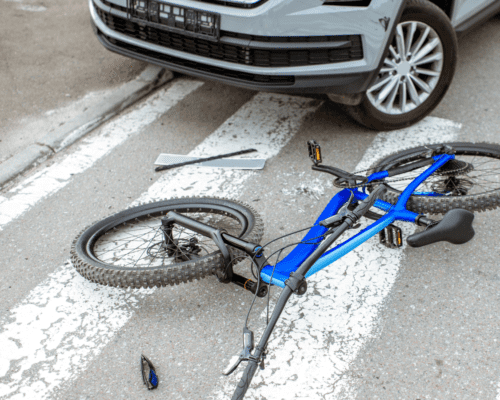
Bicycle accidents in Pasadena can be complex events. In these situations, determining fault is crucial in resolving legal and insurance matters. Understanding key factors that influence fault is essential for cyclists and drivers because negligence is the primary basis for determining liability.
Negligence as a Primary Factor
Negligence involves a failure to act with the level of care that a reasonable person would exercise under similar circumstances. When it comes to bicycle accidents, both cyclists and drivers are required to follow traffic laws and exercise caution when on the road. If either party fails to uphold these responsibilities, they may be liable for an accident.
Traffic Law Violations
Drivers and cyclists are required to adhere to the same set of traffic regulations. Violations such as running a red light, failing to yield, or improper signaling can decisively influence how fault is assigned. For example, if a driver doesn’t yield at an intersection and hits a cyclist, the driver’s violation becomes a key factor in assigning fault. On the other hand, if a cyclist disregards traffic lights and causes a collision, they could be deemed at fault.
Eyewitness Accounts and Police Reports
Eyewitness accounts and police reports are invaluable in determining fault in a bicycle accident. Eyewitnesses can provide firsthand observations of the incident, offering details that might not be immediately apparent from physical evidence alone. Their testimony can help support or contest claims made by the involved parties, adding an extra layer of credibility to the investigation.
Police reports are also important when establishing fault. Police officers are trained to assess accident scenes methodically, and their reports can be compelling evidence in legal and insurance proceedings. These reports offer an official and unbiased account of the accident. They often include observations about traffic law violations, statements from involved parties and witnesses, and other relevant details such as weather and road conditions.
Physical Evidence From the Scene
Skid marks on the road may indicate whether a driver attempted to brake before the collision, providing insights into their speed and reaction time. The length and direction of skid marks can also help reconstruct the sequence of events leading up to the accident.
Damage to the bicycle can reveal the point of impact and force involved. For example, severe damage to the rear wheel of a bike might suggest the cyclist was struck from behind, often implicating the driver. Meanwhile, damage to the front of the bike could indicate that the cyclist collided with a stationary object or vehicle. Additionally, examining vehicle damage may be helpful in terms of understanding the mechanics of the accident. The location and severity of damage on the vehicle can indicate the angle and force of impact, offering clues about the events leading up to the collision. For example, damage to the front bumper might suggest the car struck the bicycle head-on, while damage to the side could imply a sideswipe.
Road conditions can also be significant in determining fault in a bicycle accident. This is because the state of the road can influence the dynamics of an accident. Issues like potholes, uneven pavement, or debris can contribute to a loss of control, affecting cyclists and drivers. Documenting these conditions provides context for how the accident occurred and whether external factors played a part.
Common Scenarios Where Fault Is Assigned in Bicycle Accidents
Fault can vary depending on the specific details of the accident. Here are some common scenarios that demonstrate how fault may be determined.
Driver Fails to Yield at an Intersection
At intersections, drivers are required to yield the right of way to cyclists when they have the legal priority. Unfortunately, many accidents occur when drivers overlook cyclists, especially when turning or running stop signs. This oversight can lead to dangerous collisions. In these cases, the driver’s failure to yield clearly violates traffic laws, making them liable for the accident.
Dooring Accidents
Dooring accidents occur when a driver or passenger opens a car door into the path of an oncoming cyclist. This typically happens when vehicles are parked on the side of the road, and the person inside fails to check for approaching cyclists before opening the door. Traffic laws require drivers and passengers to check their surroundings to prevent such accidents, emphasizing the need for careful observation. So, in most cases, the person opening the door is found at fault, as they are responsible for ensuring it is safe to do so.
Cyclist Running a Red Light or Stop Sign
When a cyclist runs a red light, they can be found at fault in the event of an accident. Accidents in these scenarios often occur because neither drivers nor pedestrians expect cyclists to proceed through a red light. But traffic laws mandate that cyclists, like drivers, obey signals and stop at red lights. So establishing fault is typically straightforward, as traffic cameras or eyewitnesses can often confirm the cyclist’s failure to stop.
Sidewalk Riding and Crosswalk Accidents
In some jurisdictions, cyclists are not permitted to ride on sidewalks or through pedestrian crosswalks. If an accident occurs under these circumstances, the cyclist may be at fault.
Comparative and Contributory Negligence in Bicycle Accidents
In many cases, the cyclist and the driver may share some degree of fault for the accident.
Comparative Negligence: Shared Fault
In California, the concept of shared fault is governed by comparative negligence laws, which divide fault between the parties involved in a bicycle accident. This means that the cyclist and driver can be assigned a percentage of fault based on their contributions to the accident.
Even if a cyclist is partially at fault, they can still recover damages, though their compensation will be reduced in proportion to their degree of fault. For example, if a cyclist is found 30 percent at fault for an accident, they would be entitled to 70 percent of the damages awarded. Under these circumstances, a cyclist awarded $1 million in damages would receive a total of $700,000.
How Shared Fault Impacts Insurance Claims
When the fault is shared, the percentage assigned to each party affects how much compensation they can recover through insurance claims. Your bike accident attorney will often negotiate the percentage fault assigned with the insurance company.
Fault in Hit-and-Run Bicycle Accidents
Hit-and-run bicycle accidents present unique challenges in determining fault and securing compensation. In these cases, uninsured motorist coverage (UIM) can be a vital resource, allowing cyclists to file a claim with their own insurance company when the driver cannot be located.
Additionally, legal assistance can be invaluable when navigating the complexities of hit-and-run cases. An experienced lawyer can help gather evidence, communicate with insurance companies, and explore all possible avenues for compensation.
Identifying the Driver
The primary challenge in hit-and-run accidents is identifying the driver who fled the scene. Without this information, pursuing a claim against the responsible party becomes significantly more difficult. Victims often rely on eyewitness accounts or security footage to identify the vehicle or driver involved.
Uninsured Motorist Coverage
In California, uninsured motorist coverage (UIM) is a critical safeguard that provides cyclists with financial protection when the at-fault driver is unidentified or uninsured. This specialized coverage ensures that victims are not left to bear the burden of medical expenses and damages alone.
The Role of a Bicycle Accident Lawyer in Determining Fault
Legal representation is crucial for anyone involved in a bicycle accident, especially when the fault is contested, or injuries are severe. An experienced bicycle accident attorney can provide essential guidance in these cases. Your Pasadena personal injury lawyer will help gather and preserve evidence, such as eyewitness accounts, police reports, and physical evidence from the scene, which are essential in proving fault. Lawyers are also skilled negotiators, capable of dealing with insurance companies to ensure fair compensation. In cases involving shared fault, we can help accurately determine fault percentages to maximize recovery.
How Our Pasadena Bicycle Accident Attorney Can Help
Choosing the right lawyer to represent you after a Pasadena bike accident can significantly impact your settlement. Vardanyan Law Firm has a proven track record of success in bicycle accident cases.
Contact our firm at (747) 850-9241 to speak with our knowledgeable bicycle accident attorney in Pasadena.